
Custom Safety Vests with Your Logo: A Guide to Classes, Pockets and Printing
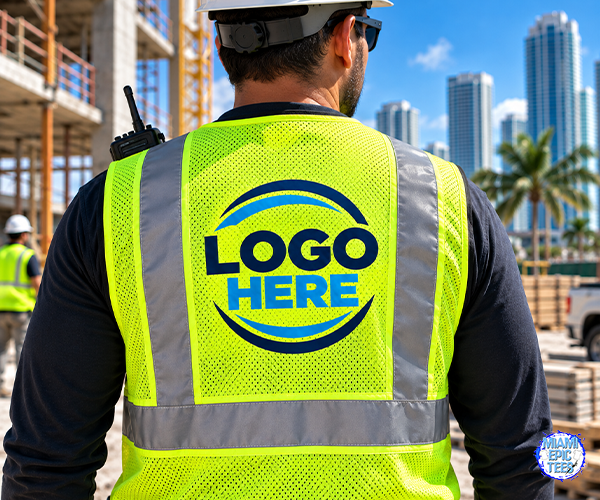
A hi-vis vest is often the first thing people see on your crew. On a road job in Doral or a warehouse floor in Medley, it is also the one piece of workwear with real safety rules behind it. Adding your company logo turns that vest into branding, but only if it is done without cutting into the visibility the vest was built for.
This guide explains safety vest classes in plain English, how to put a logo on a vest the right way and which features make sense for Miami crews. When you are ready to order, our custom safety vests and hi-vis workwear page has the details.
What The Safety Vest Classes Mean
In the United States, most hi-vis apparel is rated under a standard called ANSI/ISEA 107. It sorts garments by where they are used (off-road, roadway or public safety) and by performance class. The class tells you how much fluorescent fabric and reflective material the garment has.
Class 1
The lowest visibility level, meant for work areas away from traffic, like parking lots, warehouses and loading docks. Class 1 is not meant for roadway work.
Class 2
The most common safety vest. Class 2 is used for work on or near roads and for jobs where traffic moves faster or visibility is lower. Many construction, utility and survey crews wear Class 2 vests every day.
Class 3
The highest visibility level, used for high-speed traffic areas and low-light conditions. Class 3 garments cover more of the body, so they include sleeves. A standard sleeveless vest on its own does not reach Class 3. The class you need is set by your employer, your general contractor or the agency in charge of the job. If you are not sure, check the project’s safety plan before ordering. Federal rules, for example, call for Class 2 or Class 3 apparel for workers on federal-aid highways.
Picking A Color
Hi-vis garments come in fluorescent yellow-green (often called lime) and fluorescent orange-red. Both are recognized under the standard. Some companies choose based on what the job site requires, and others pick the one that best matches their brand. Whichever you choose, keep it consistent across the crew so your team is easy to spot as a unit.
How To Add Your Logo Without Breaking Compliance
This is the part most people get wrong. A logo is fine on a safety vest, but where and how big it goes matters.
• Never print over the reflective stripes. The reflective tape is what makes your crew visible in headlights, and covering it defeats the purpose.
• Keep the logo on the fluorescent background fabric, usually the left chest or the back panel between the stripes.
• Keep it reasonably sized. Every square inch of logo replaces fluorescent fabric, and a rated vest has to keep a minimum amount of that background to meet its class.
• Start with a vest from a manufacturer that allows decoration, and check the label for any printing guidance.
When you order from us, we plan the placement around the stripes so your logo is visible and the vest still does its job.
Best Printing Methods For Vests
Screen printing is the most affordable option for larger vest orders with a one or two color logo. DTF works well for multi-color logos and smaller runs. Embroidery is usually not a good fit for mesh vests, because the open mesh cannot hold dense stitching cleanly. For a deeper look at each method, see our guide to screen printing vs. DTF vs. DTG vs. embroidery.
Mesh Or Solid Fabric In Miami Heat
Mesh vests let air move through, which makes a real difference in a Miami August. They are the most comfortable choice for all-day outdoor work. Solid polyester vests give a smoother surface, so larger logos and fine detail print more cleanly on them. Many companies split the difference with a mesh body and a solid panel where the logo goes.
Pockets And Features Worth Paying For
A safety vest with pockets saves your crew trips back to the truck. Popular features include a radio or mic tab on the shoulder, pen slots, a clear ID badge pocket and a large inside pocket that fits a tablet or plans. Zipper closures look clean and stay put. Breakaway vests, which pull apart at several points, are a smart pick for crews working around moving machinery, since the vest releases if it gets caught.
Getting The Size Right
Safety vests are worn over other clothing, so size for what your crew wears underneath. A vest that is too tight rides up and exposes less fluorescent fabric, while one that is too loose can snag on equipment. Many vest styles come in combined sizes like medium/large or 2XL/3XL, which makes ordering for a whole crew simpler. Collect sizes before you order and add a few extras for new hires and visitors to the site.
Caring For Hi-Vis Vests
Fluorescent fabric and reflective tape both wear out over time. Sun, sweat and hot dryers speed that up. Wash vests in cold water on a gentle cycle, skip bleach and fabric softener and let them air dry. Check the care label, since some reflective materials are only rated for a certain number of washes.
Replace a vest when the fluorescent color has faded, the reflective stripes are cracked or peeling or the vest is torn. A faded vest may look fine to the person wearing it, but it no longer does the job it was bought for. In a Miami summer, busy crews often need new vests more than once a year, so plan for reorders.
Going Beyond The Vest
Many crews pair vests with hi-vis long sleeve shirts, which add sun protection and can reach higher visibility classes when they are rated for it. Branded hats and dri-fit tees for under the vest round out the look. Read our guide to the best long sleeve shirts for construction workers for more on that.
Frequently Asked Questions
Can you print a company logo on an ANSI safety vest?
Yes. The logo needs to stay off the reflective stripes and be sized so the vest keeps enough fluorescent background to meet its class. We place logos with that in mind.
Which safety vest class do I need for road work in Florida?
Road work near traffic generally calls for Class 2 or Class 3. The exact requirement comes from your employer, contractor or the agency running the project, so confirm it before you order.
What is the difference between Class 2 and Class 3 vests?
Class 3 uses more fluorescent and reflective material and includes sleeves, so it is meant for higher speed traffic and low-light work. Class 2 covers most everyday roadway and construction jobs.
How quickly can I get custom safety vests?
Many vest orders are ready in a few days depending on quantity and the print method. Tell us your start date and we will plan around it.